
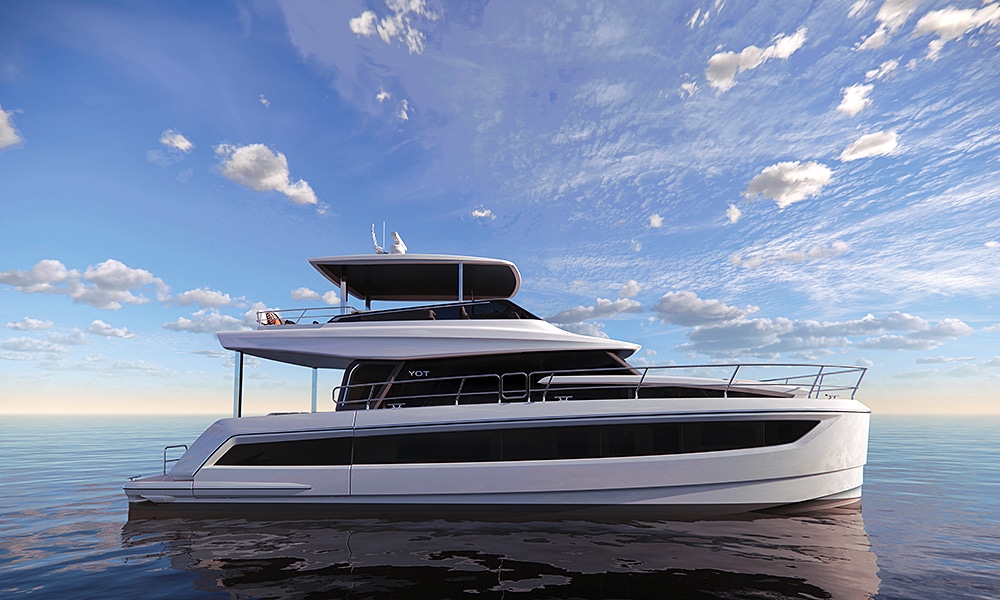
In the modern maritime industry, fuel efficiency and cost control are among the most important factors influencing commercial success. With rising fuel prices, strict environmental regulations, and intense global competition, shipowners are under constant pressure to operate vessels as efficiently as possible. While operational practices and crew performance play significant roles, one factor has a far greater long-term influence than most people realize: ship design.
Every vessel’s fuel consumption profile and cost structure are largely determined long before it enters service. Decisions made during the ship design phase shape hull resistance, propulsion performance, maintenance requirements, and operational flexibility. A well-designed ship can generate savings for decades, while a poorly optimized one may struggle to remain profitable.
This article explores how ship design directly affects fuel efficiency and operational costs. It examines key engineering principles, practical design strategies, and long-term financial implications, providing valuable insight for shipowners, engineers, and maritime professionals.
The Strategic Importance of Ship Design in Cost Management
Ship design is not only a technical exercise but also a strategic business decision. The layout, materials, and systems chosen during development determine how much energy a vessel will consume and how much it will cost to operate and maintain.
Fuel typically represents one of the largest operating expenses in commercial shipping. Even small improvements in efficiency can result in substantial savings over time. A reduction of just a few percentage points in fuel consumption can translate into millions in lifetime cost reductions.
Operational costs extend beyond fuel. Maintenance, repairs, crew expenses, port fees, and compliance costs are all influenced by design choices. Modern ship design integrates financial planning with engineering analysis to achieve sustainable profitability.
Hull Form and Its Influence on Fuel Efficiency
Resistance and Water Flow
One of the primary goals of ship design is to minimize resistance as a vessel moves through water. Resistance determines how much power is required to maintain speed, and power directly affects fuel consumption.
Hull resistance consists mainly of frictional resistance and wave-making resistance. Friction arises from contact between the hull and water, while wave-making resistance results from energy lost in creating waves.
Designers use advanced modeling techniques to shape hulls that reduce both forms of resistance. Smoother water flow around the vessel lowers energy demand and improves efficiency.
Hull Shape Optimization
Hull shape plays a central role in fuel performance. A well-optimized bow reduces wave formation, while an efficient stern improves propeller inflow.
Modern ship design relies on computational fluid dynamics and model testing to evaluate multiple hull variants. Engineers compare resistance curves and select geometries that offer the best balance between capacity and efficiency.
Optimized hull forms reduce power requirements and support lower fuel consumption throughout the vessel’s life.
Surface Finish and Hull Condition
Hull surface condition also affects resistance. Rough surfaces increase friction and energy loss.
During ship design, material selection and coating systems are chosen to maintain smoothness over time. Anti-fouling coatings prevent marine growth that increases drag.
Designing for easy cleaning and maintenance helps preserve efficiency and reduce operational costs.
Propulsion Systems and Energy Efficiency
Engine Selection and Matching
The choice of main engine is one of the most significant cost-related decisions in ship design. Engine type, size, and operating profile must match the vessel’s expected service conditions.
Oversized engines may operate inefficiently at low loads, while undersized engines struggle to meet performance requirements. Proper matching ensures optimal fuel use across operating ranges.
Designers analyze power demand curves to select engines that deliver consistent efficiency.
Propeller Design and Integration
Propellers convert engine power into thrust. Their design strongly influences fuel efficiency.
Modern ship design includes detailed analysis of propeller geometry, pitch, and diameter. Engineers aim to maximize thrust while minimizing cavitation and vibration.
Well-integrated propeller systems improve propulsion efficiency and reduce maintenance costs.
Hybrid and Energy Management Systems
Many modern vessels incorporate hybrid propulsion and energy management systems. These systems coordinate engines, generators, and energy storage to optimize power usage.
By adjusting output to real-time demand, they reduce unnecessary fuel consumption. Ship design now includes space and infrastructure for these technologies.
Energy management improves both efficiency and system reliability.
Weight Management and Structural Design
Impact of Vessel Weight on Fuel Use
A vessel’s displacement directly affects resistance and fuel consumption. Heavier ships require more power to move through water.
Structural weight, equipment weight, and cargo distribution all influence total displacement. Ship design seeks to minimize unnecessary weight while maintaining strength.
Lightweight construction materials and optimized framing systems contribute to lower fuel usage.
Structural Optimization Techniques
Advanced structural analysis allows engineers to reduce material without compromising safety. Finite element modeling identifies areas where thickness can be reduced.
High-strength steels and composite materials are increasingly used in critical areas. These materials improve strength-to-weight ratios.
Optimized structures enhance efficiency and reduce long-term operating costs.
Operational Profile and Design Alignment
Speed, Route, and Service Pattern Considerations
Fuel efficiency depends on how closely ship design matches actual operating conditions. Vessels designed for high speed may perform poorly in slow-steaming environments.
Designers analyze trading routes, port schedules, and expected speeds to tailor hull and propulsion systems accordingly.
Alignment between design and operation maximizes efficiency.
Cargo Capacity and Load Optimization
Cargo capacity influences revenue potential and fuel efficiency. Underutilized capacity leads to inefficient fuel use per transported unit.
Ship design balances cargo volume with resistance and stability. Well-designed vessels maintain high load factors without excessive energy demand.
Efficient loading arrangements also reduce port time and costs.
Maintenance, Reliability, and Life-Cycle Costs
Accessibility and Equipment Layout
Maintenance costs are strongly influenced by design. Poorly arranged machinery spaces increase repair time and labor expenses.
Modern ship design prioritizes accessibility and modular components. Easy access reduces downtime and maintenance costs.
Efficient layouts also improve safety and inspection quality.
Corrosion Protection and Durability
Corrosion leads to structural damage, increased resistance, and costly repairs. Designers integrate protective coatings, drainage systems, and cathodic protection into hull structures.
Durable materials and proper detailing extend service life and reduce replacement costs.
Long-term durability supports stable operating budgets.
Predictive Maintenance Integration
Digital monitoring systems are increasingly incorporated into ship design. These systems track equipment condition and predict failures.
Predictive maintenance reduces unexpected breakdowns and expensive emergency repairs.
Designing for monitoring capability improves reliability and cost control.
Environmental Regulations and Cost Implications
Emission Compliance and Design Adaptation
Environmental regulations influence fuel choices and system configurations. Ship design now includes exhaust treatment systems, low-sulfur fuel compatibility, and alternative propulsion options.
Compliance-related retrofits are expensive. Designing for future regulations reduces long-term costs.
Forward-looking design protects investment value.
Energy Efficiency Standards
International energy efficiency standards require vessels to meet specific performance benchmarks. Designers must optimize hull, propulsion, and systems to achieve compliance.
Meeting these standards enhances marketability and reduces regulatory risk.
Digital Technologies and Performance Optimization
Digital engineering tools support fuel and cost optimization throughout development. Simulation platforms predict energy consumption under various scenarios.
During operation, digital twins and monitoring systems provide real-time performance data. Operators can adjust speed, trim, and routing to reduce fuel use.
Integrating digital systems into ship design enhances long-term efficiency.
Challenges in Designing for Cost Efficiency
Balancing efficiency with construction cost remains challenging. Advanced materials and technologies increase upfront expenses.
Uncertain fuel prices and regulatory changes complicate long-term planning. Designers must account for future scenarios.
Collaboration between engineers, owners, and operators is essential for effective decision-making.
Frequently Asked Questions About Ship Design and Efficiency
How does ship design affect fuel consumption?
Ship design influences hull resistance, propulsion efficiency, and weight, all of which determine fuel usage.
Can an inefficient ship be improved after construction?
Retrofits can improve efficiency, but they are costly. Proper initial design is more effective.
Why is hull shape so important for cost control?
Hull shape affects resistance and power demand, directly impacting fuel expenses.
Do larger ships always use more fuel?
Larger ships consume more fuel overall but may be more efficient per unit of cargo.
How does maintenance relate to ship design?
Good design improves accessibility and durability, reducing maintenance costs and downtime.
Are digital systems essential for modern efficiency?
Yes, digital monitoring and optimization tools significantly enhance fuel and cost management.
Conclusion
Ship design plays a decisive role in shaping fuel efficiency and operational costs throughout a vessel’s life. From hull form and propulsion systems to structural weight and maintenance accessibility, every design decision influences energy consumption and financial performance. A well-optimized vessel can generate long-term savings, improve regulatory compliance, and remain competitive in changing markets.
Modern ship design integrates engineering analysis, digital modeling, and economic planning to achieve sustainable efficiency. By aligning vessel characteristics with operational profiles and future regulations, designers create assets that deliver consistent value over decades.
For shipowners and engineers, investing in thoughtful, performance-driven ship design is not merely a technical choice. It is a strategic commitment to profitability, resilience, and environmental responsibility in an increasingly demanding maritime industry.